Pet advice
Ferrets
Ferret care notes covering housing, diet, vaccination, flea control, deworming and common problems.
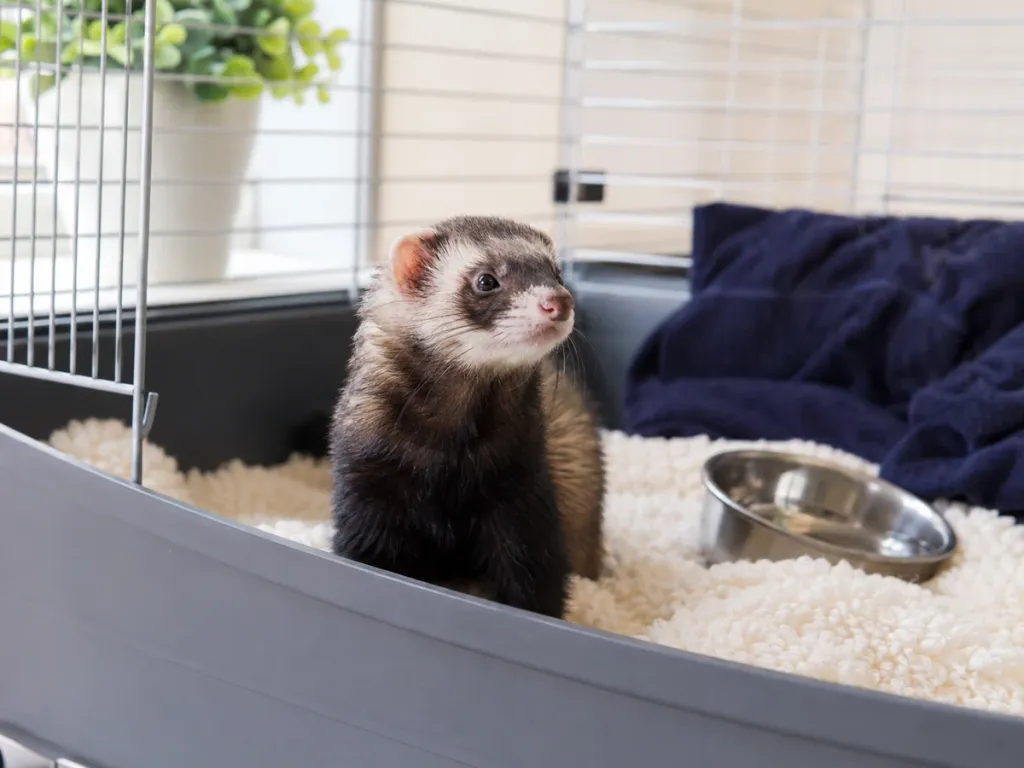
Ferrets have a lifespan of about 10 years and are carnivores, just like dogs and cats. Many people feed them on dry or tinned cat foods, but clients do tell us that the specific ferret diets, or a natural diet of whole dead rabbits, pigeons or rodents, seems to produce ferret motions that are both smaller in volume and less smelly — so we would definitely recommend you consider those options.
Ferrets can be kept indoors but most are housed outdoors. The size of the cage is not as important as the security. Ferrets are known as phenomenal escape artists and will easily escape from the tiniest hole, so be prepared. It’s best to ensure that they do have a separate sleeping area where they can hide, and bedding such as an old T-shirt or towel is best.
With adequate supervision, ferrets can be happily kept with dogs and cats — but clearly not with rabbits or other small furries, as they’ll eat them.
Breeding
Ferrets breed from their first spring after birth, and the females — “jills” — are in season from spring to summer. Puberty starts at the first spring after birth and pregnancy lasts 6 weeks. The normal litter size is 6 to 8, the eyes will open at 4 or 5 weeks, and weaning is by 8 weeks.
Vaccinations
All ferrets need a yearly vaccination against the Canine Distemper virus. Ferrets travelling abroad will also need rabies vaccination and current travel paperwork.
Flea control and deworming
Flea control is very important. We recommend a modern spot-on treatment that is used every month. The drug sits on the skin and fur and kills fleas that jump onto your ferret’s fur. Deworming is by a tablet. There are lots of products available through supermarkets and pet shops, but the most effective treatments may only be available through a veterinary practice.
What can go wrong?
Most commonly we see ferrets with fleas and ear mites, when they have not been treated with a good flea control product. Ferrets sometimes suffer from heart disease.
Ferret essentials
- Lifespan around 10 years
- Carnivores — a ferret diet or natural whole prey beats tinned cat food
- Yearly vaccination against Canine Distemper virus
- Monthly spot-on for fleas; deworming by tablet
- Security of the cage matters far more than its size
Frequently asked questions
Can ferrets live with other pets?
Why does my ferret smell?
Do ferrets really escape that easily?
Read more animal care notes
The site is currently an information-only blog. It does not accept bookings, calls, visits or urgent-care requests.