Pet advice
Fish
Fish care notes covering temperature, water quality, stocking density, feeding and common problems.
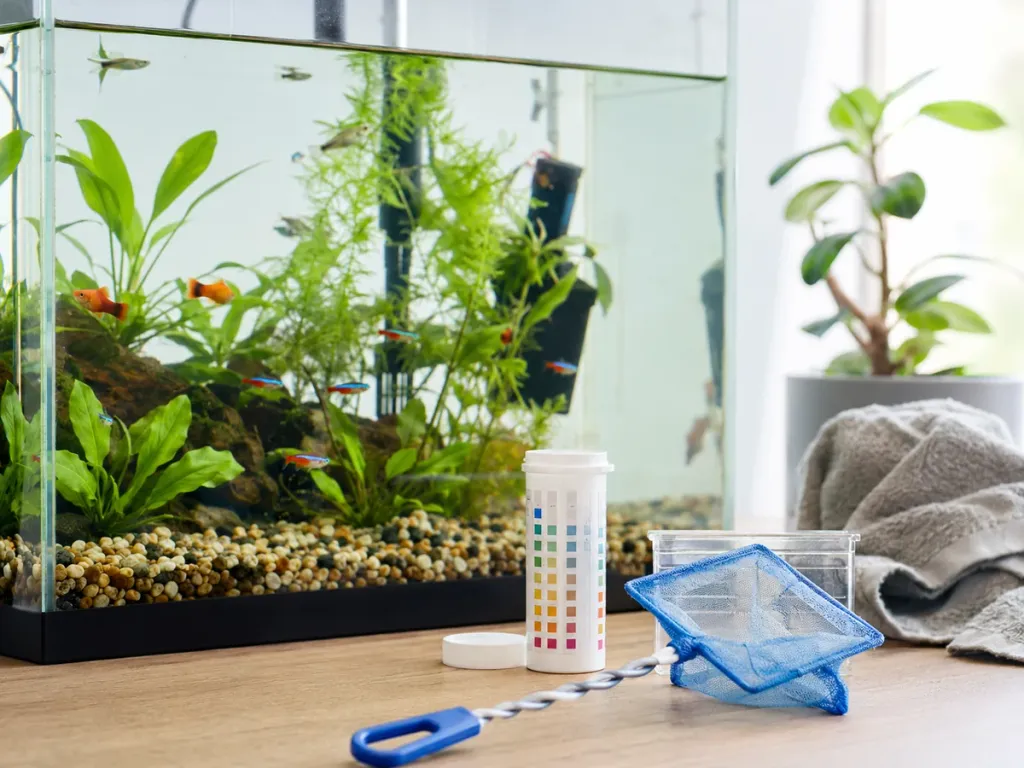
Fish are separated into freshwater species and marine species, and also into either indoor tanked fish or outdoor pond fish.
How to look after them
All fish are cold-blooded and each different species has its own “POTZ” — preferred optimal temperature zone. It is critical that you ensure that your fish is housed at a temperature in its preferred zone.
Do try to ensure that you are keeping an adequate number of fish for the tank or pond space that you are providing. As a general rule, every inch (2.5 cm) of fish will need 20 litres of tank and/or 900 cm² of surface area.
A word about water
Your aim must always be to get the best water quality that you can achieve, in order to reduce the stress on your fish. Ordinary tap water that has been left to aerate for a few days can allow the chlorine to dissipate. Replace freshwater gradually and monitor water quality.
Diets
Different fish species will require different diets, but as a general rule we suggest that you feed a pelleted diet, and change brands from time to time in order to vary their diet as much as possible.
Supplements
There are specialist vitamin and mineral ranges for exotic species, including a fish range aimed at pests like flukes and lice. These are formulated on veterinary research rather than guesswork, and are updated as that research moves on. Ask us which is worth using for the species you keep.
What can go wrong?
Common problems include bacterial and fungal scale problems, parasites, and buoyancy disorders.
Fish essentials
- Every species has its own POTZ — preferred optimal temperature zone
- Rule of thumb: every inch (2.5 cm) of fish needs 20 litres of tank and 900 cm² of surface area
- Use ordinary tap water aerated for a few days, not a water conditioner
- Replace half your freshwater at a time
- Vary the brand of pelleted food from time to time
Frequently asked questions
Do I need a water conditioner?
How many fish can I keep?
What goes wrong with fish?
Read more animal care notes
The site is currently an information-only blog. It does not accept bookings, calls, visits or urgent-care requests.